




AI chatbots are changing customer service by giving businesses a faster, more consistent way to support customers across digital channels. When trained properly, they can answer questions, guide users through processes, and solve common issues in real time.
AI chatbots improve customer service by delivering quick, accurate support through websites, apps, and messaging platforms. When they are built into service workflows, they can reduce wait times, handle frequently asked questions efficiently, and provide a more consistent customer experience.
A well-trained chatbot does far more than reply to simple questions. It can help customers move through service steps, point them to the right information, and resolve many issues without delay. That is why specialised AI customer service training courses are becoming increasingly important for businesses that want to design and manage chatbots properly.
Understanding AI Chatbots in Customer Service
An AI chatbot is a software tool that learns from real conversations and improves over time. Unlike older rule-based bots that can only follow fixed scripts, AI chatbots use machine learning and live conversation data to understand what the customer wants and respond in a more natural way.
Instant responses
Customers get answers quickly without waiting in a queue.
Reduced workload
Routine questions are handled automatically, freeing up human agents.
Consistent support
Every customer receives the same clear and accurate service standard.
Scalable handling
Chatbots can manage large volumes of enquiries at the same time.
Why Training Your Chatbot Matters
The success of an AI chatbot depends heavily on how well it has been trained. AI chatbot training directly affects how well the bot supports customers. If the training is poor, the chatbot may give vague, incorrect, or irrelevant answers, which quickly damages the customer experience.
Components of effective chatbot training
- Industry-specific data so the chatbot understands terminology and context.
- FAQs, business documents, and structured service information.
- CRM data to support more personalised responses.
- Continuous updates based on real customer interactions.
The Role of Natural Language Processing
Natural Language Processing (NLP) helps chatbots understand the meaning behind sentences, not just the keywords inside them. This allows them to recognise slang, abbreviations, spelling mistakes, and even incomplete messages. The result is a conversation that feels far more natural and useful to the customer.
Benefits for Customer Support
Designing Conversation Flows
A chatbot is only as strong as the experience it creates. Well-designed conversation flows guide users smoothly through greetings, common questions, service steps, and fallback moments. This helps the chatbot stay useful even when customers ask something unexpected.
Monitoring and Improving Performance
Deployment is not the end of the process. Strong chatbot performance comes from regular review, testing, and refinement.
- Accuracy of chatbot responses
- Resolution rate for enquiries
- Customer satisfaction scores
- Patterns in feedback and interaction history
Reviewing chat logs and customer feedback makes it easier to spot weak points and steadily improve the chatbot over time.
Industry-Specific Chatbot Training
Chatbots perform best when they are trained for the industry they serve. The language, customer expectations, and service requirements vary a lot across sectors.
- Ecommerce: Helps with orders, product details, returns, and payment issues.
- Healthcare: Handles sensitive patient questions with greater care and precision.
- Finance: Supports account enquiries, transactions, and service requests securely.
A healthcare chatbot should sound clear and professional, while a retail chatbot may need a friendlier and more conversational tone. Industry tuning makes a big difference.
Balancing Automation with Human Support
Even the most advanced chatbot cannot solve every problem. Offering a clear handover to a human agent is essential for more complex, emotional, or sensitive enquiries. This blended model builds trust and gives customers confidence that they will still be looked after when the issue goes beyond automation.
Best Practices for Effective Chatbots
- Train with real customer conversations, not assumptions.
- Include messy inputs such as typos, shorthand, and abbreviations.
- Refresh training data as customer behaviour, products, and services change.
- Test responses regularly to protect quality and accuracy.
- Track performance metrics and improve continuously.
Common Challenges in Chatbot Implementation
Businesses often run into a few predictable challenges when introducing AI chatbots:
- Handling complex or unpredictable customer questions
- Maintaining consistency across multiple channels
- Managing the volume and quality of training data
- Protecting privacy and customer data
Structured training, ongoing testing, and clear escalation rules are the best way to deal with these issues.
Enhancing Customer Experience with AI Chatbots
When trained well, chatbots improve the customer journey in practical, measurable ways:
- Providing support 24/7
- Reducing wait times
- Offering more personalised support using CRM or customer history
- Collecting feedback to improve service quality
These improvements often lead to stronger customer loyalty, better satisfaction scores, and smoother service delivery.
Getting Started with Chatbot Training
Businesses can begin with a focused approach:
- Define the goal — customer support, sales assistance, or engagement.
- Gather training data — chat logs, FAQs, documents, and service content.
- Design intents and entities — connect user questions to useful responses.
- Build conversation flows — include common tasks and fallback routes.
- Monitor and refine — keep improving based on real use.
If you want to learn the full process in a structured way, our AI Customer Service Training Online course can help you build practical skills in data preparation, NLP implementation, and chatbot performance optimisation.
Measuring Success
- Query resolution rate
- Reduction in workload for human agents
- Customer satisfaction feedback
- Clear improvement in response accuracy over time
Future of AI Chatbots in Customer Service
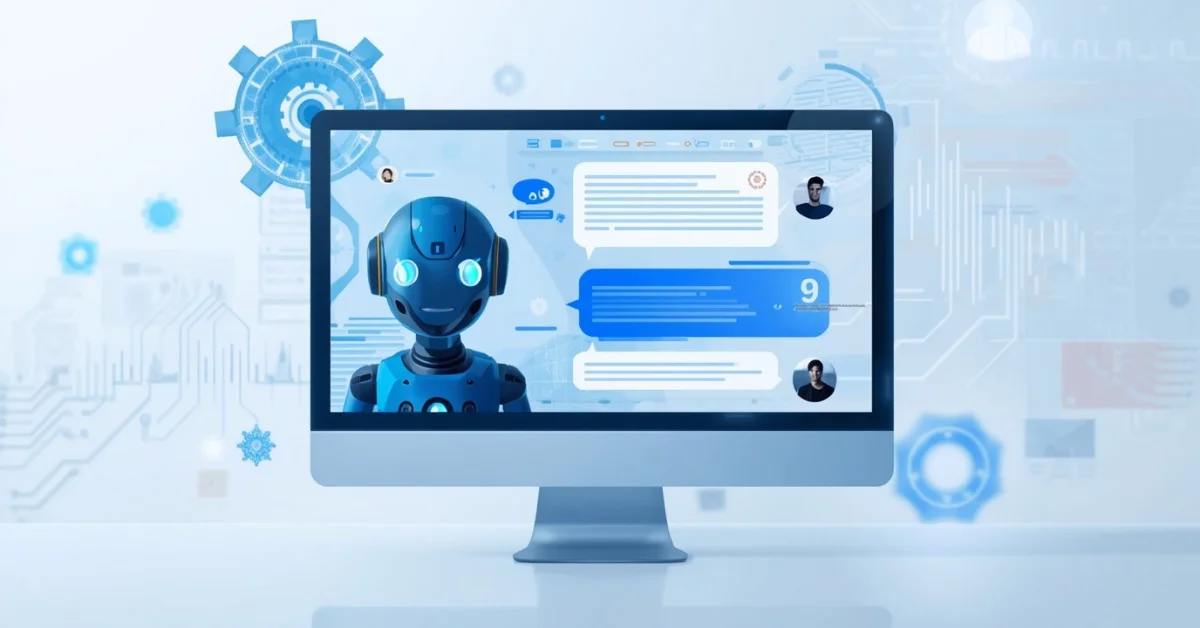
AI chatbots are becoming more adaptive, more context-aware, and better at understanding complex user behaviour. As NLP and real-time machine learning continue to improve, businesses that invest in chatbot training now will be better placed to deliver fast, scalable, and reliable customer support in the years ahead.
Investing in chatbot capability today lays the foundation for stronger customer service tomorrow. For expert guidance, call us on 1300 649 299 or visit our office for a personal consultation.
Ready to train your team?
Learn how to design, train, and improve AI chatbots for better customer support with our practical customer service training.
Frequently Asked Questions
Q1: What is an AI chatbot and how does it help in customer service?
A: An AI chatbot is a digital assistant trained to understand customer questions and respond instantly. It helps reduce wait times, provides round-the-clock support, and manages routine enquiries so human agents can focus on more complex work.
Q2: How do AI chatbots improve response time?
A: Chatbots can process and answer common questions instantly, without breaks or queue delays. This gives customers faster access to support and reduces pressure on the wider service team.
Q3: Can AI chatbots manage complex customer questions?
A: Yes, if they are properly trained using real conversations and solid business knowledge. They can also escalate more complex or sensitive issues to a human agent when needed.
Q4: Do AI chatbots work for all industries?
A: Yes, but they perform best when trained for the specific industry. For example, an ecommerce chatbot needs to understand orders and returns, while a healthcare chatbot must handle medical wording more carefully.
Q5: How do AI chatbots learn from customer interactions?
A: They use NLP and machine learning to analyse questions, recognise intent, and improve their responses over time. The more relevant training data they receive, the better they tend to perform.
Q6: Are AI chatbots cost-effective for businesses?
A: In many cases, yes. Chatbots can reduce the need for large frontline support teams, lower response times, and manage many enquiries at once, which can improve efficiency while keeping service quality high.
Q7: Can chatbots provide personalised support?
A: Yes. When connected to CRM data, chatbots can tailor responses using customer history, preferences, and previous interactions, which makes support feel more relevant and helpful.